
Children Specialization
Professional Certification in Psychoanalysis
The Children specialization certifies you to apply child and developmental psychoanalysis with young clients and to coach the parents around them. You learn to read play, drawing, and behavior as a child's language, and to translate it for families who feel lost. It is also deeply personal: the same lens helps you understand your own child more patiently, or finally meet the child you once were. This is a completion-based professional certification from Therapist University in Miami.
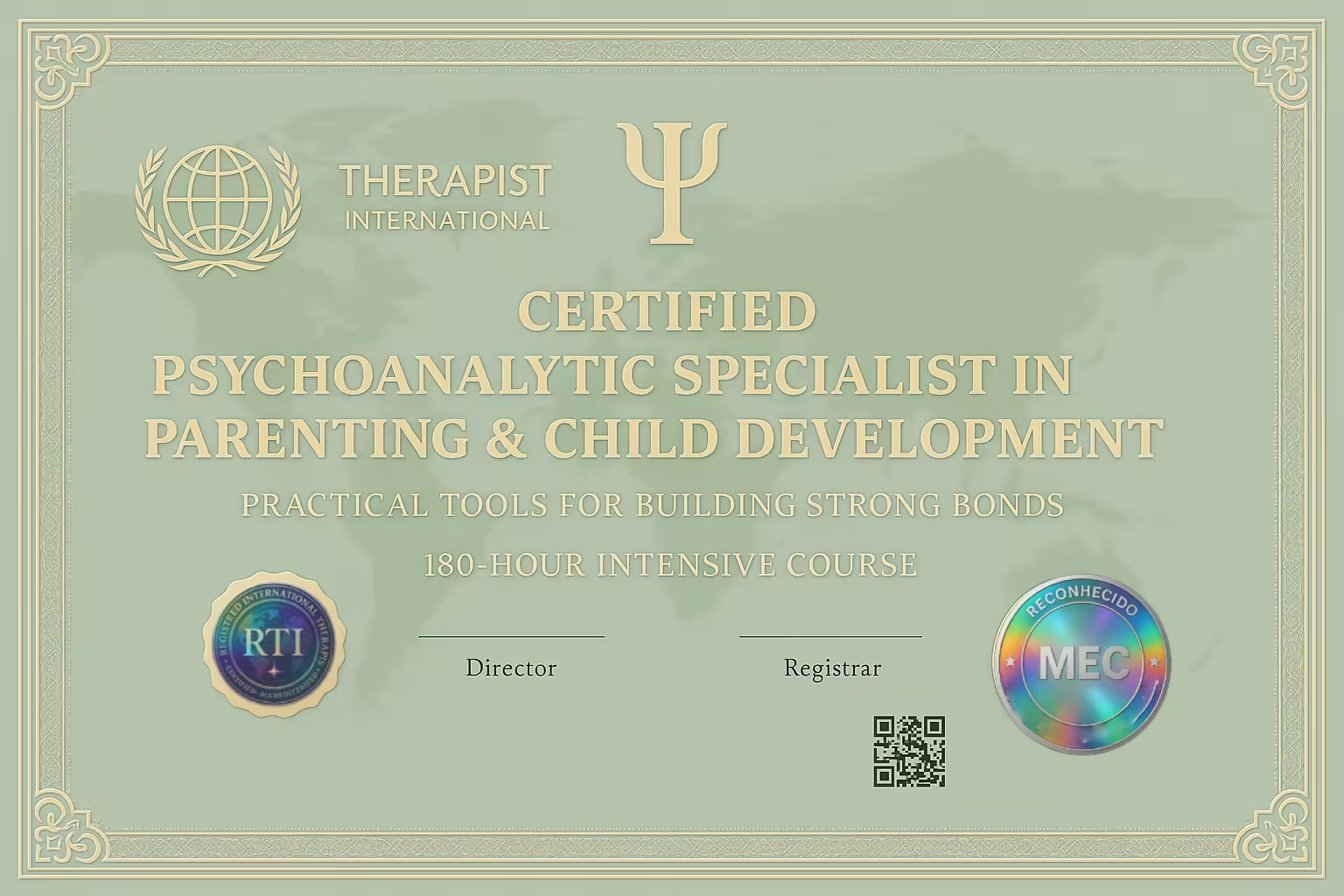
For your practice
Child and developmental psychoanalysis — working with young clients and guiding parents with age-appropriate technique.
For your own life
Understand your own child, or the child you once were.
What you'll learn
- 1Developmental Foundations: Reading the Child by Age. How emotional life, attachment, and self-regulation unfold from infancy through latency. You learn what is developmentally expected versus what signals distress, so you respond to a five-year-old and a ten-year-old very differently.
- 2Play, Drawing, and Symbol as a Child's Language. Children rarely report feelings directly. This module trains you to observe play sequences, repetition, and drawings as communication — and to enter a child's world through it rather than interrogating them.
- 3Attachment, Separation, and the Family System. Working with separation anxiety, clinginess, and the bonds between child and caregiver. You map how the family system holds a child's symptom and how shifting the adults shifts the child.
- 4Working With Parents: The Parallel Conversation. Most child work is really parent work. Structured techniques for guiding caregivers — translating the child's behavior, reducing blame, and giving them concrete, age-appropriate strategies to use at home.
- 5Common Childhood Struggles and Session Structure. Frameworks for supporting and working with tantrums, sleep and bedtime fears, school refusal, sibling conflict, and big transitions like a new baby or a parental split — with a session arc suited to short attention spans.
- 6Scope, Safety, and Ethical Boundaries With Minors. Consent and the caregiver's role, recognizing when a presentation is beyond your scope, mandatory-referral situations, and how to coordinate respectfully with pediatric and educational professionals.
Who this is for
- Practitioners who already work with adults and want age-appropriate technique for clients under 12 and their caregivers
- Parents, teachers, and pediatric professionals who want a structured way to understand a child's emotional world rather than just manage behavior
- People processing their own childhood — who want to revisit early experiences with a developmental, non-blaming framework
- Coaches and counselors who keep getting referred families and need scope-honest tools for working with young clients
What you'll be able to do
- Conduct an age-appropriate first session with a child and a separate orienting conversation with caregivers
- Use play and drawing as observational tools to understand what a young client cannot yet put into words
- Guide parents with concrete, non-blaming strategies for tantrums, bedtime fears, school refusal, and major transitions
- Recognize the boundary of your scope with minors and refer to medical or educational professionals when a situation calls for it
What's included
Globally valid certificate
An official certificate of completion you can show and verify.
Professional register entry
Your name in the Therapist University professional register.
Practitioner ID & badge
Your official, verifiable practitioner ID and digital badge.
This is a completion-based professional certification in child and developmental psychoanalysis with a professional register entry and practitioner ID badge — not a state license, an academic degree, or an accredited clinical credential.
Questions
Does this certification let me practice as a licensed child psychologist?
No. This is a completion-based professional certification in child and developmental psychoanalysis — not a state license, an academic degree, or an accredited program. It adds you to our professional register and issues a practitioner ID badge. It does not authorize you to diagnose, prescribe, or present yourself as a licensed clinician; where a license is legally required, you must hold that separately.
I'm a parent, not a therapist. Will this still be useful?
Yes. Many enrollees take it for the personal angle — to understand their own child's behavior with more patience, or to revisit their own childhood through a developmental lens. The curriculum is written so the strategies for tantrums, fears, and transitions are usable at home, while the professional modules give you a deeper structure if you ever choose to work with families.
Will I learn to diagnose or cure childhood disorders?
No. We deliberately use the language of understanding, working with, and supporting children — never curing or diagnosing. You learn to recognize when a child's distress is within a supportive scope and, just as importantly, when it needs a medical or educational referral. Identifying that boundary is a core skill we certify.
Is the Children specialization valid in my country?
It is a globally valid certificate of completion, used by graduates across 130+ countries. It certifies that you trained and qualified through Therapist University — it is not a government-issued license. See our Recognition & Validity page for the honest specifics.
What exactly do I receive?
The certificate of completion, an entry in our professional register, and your official practitioner ID badge — all publicly verifiable.
Become a certified Children specialist
$297 · certificate, professional register entry, and practitioner ID included.