
Mental Disorders Specialization
Professional Certification in Psychoanalysis
The Mental Disorders Specialization certifies you to recognize how major psychological presentations show up in real people — anxiety, mood, psychotic, personality, and trauma-related patterns — and, just as importantly, to know where psychoanalytic work fits and where a medical or psychiatric referral is required. It is a completion-based professional certification from Therapist University. The personal hook: if you have ever wondered, in plain language, what is actually happening inside you or someone you love, this gives you that map.
For your practice
A structured overview of recognizing major presentations, scope-of-practice boundaries, and when to work with or refer.
For your own life
Finally understand, in plain language, what's happening inside you or someone you love.
What you'll learn
- 1How We Understand Disorder: The Psychoanalytic Lens vs. the Diagnostic Manual. What a symptom means in psychoanalytic terms, how that differs from a DSM-5 or ICD-11 category, and why we work with the person and the underlying conflict rather than labeling and 'diagnosing.' Sets the language you will use for the rest of the certification.
- 2Recognizing Major Presentations. How anxiety, depressive and mood states, psychotic features, personality structures (e.g., borderline and narcissistic organization), and trauma responses actually present in a session — the observable signs, the inner experience behind them, and how to describe what you are seeing without overstepping into medical diagnosis.
- 3Scope of Practice: The Boundaries You Never Cross. The single most important module. What a certified psychoanalytic practitioner can and cannot do, why medication, formal diagnosis, and acute psychiatric conditions belong to licensed medical professionals, and how to hold that line confidently and ethically with clients.
- 4When to Work With vs. When to Refer. A concrete decision framework: which presentations are appropriate for sustained psychoanalytic work, which require parallel medical care, and which demand immediate referral. Includes how to make a warm, respectful referral that keeps the client's trust intact.
- 5Risk, Crisis, and Safety Signposting. Recognizing warning signs of acute risk (including self-harm and crisis states), what to do in the moment, and how to direct someone to emergency and crisis resources such as 988 in the US. Built around protecting the person, not playing doctor.
- 6The Personal Application: Understanding Yourself and the People You Love. Plain-language frameworks you can apply to your own life — making sense of a relative's diagnosis, your own recurring patterns, or a loved one's struggle — so the knowledge supports you personally as well as professionally.
Who this is for
- Aspiring and practicing psychoanalysts who want a structured way to recognize major presentations and stay firmly inside their scope of practice rather than guessing
- Counselors, coaches, and helping professionals who keep meeting clients in distress and want to know with confidence when to work with someone and when to refer
- Anyone living alongside a mental health condition — your own, a partner's, or a relative's — who wants to understand in plain language what is happening and what kind of help fits
- Students building toward the full psychoanalysis qualification who want a clear, scope-honest foundation in how disorder is understood
What you'll be able to do
- Recognize and accurately describe how major psychological presentations appear in a session, using clear psychoanalytic language rather than diagnostic labels
- Apply a defined scope-of-practice boundary — knowing exactly when to work with a client and when a medical or psychiatric referral is required
- Identify acute risk and crisis signs and signpost a person to the appropriate emergency and crisis resources
- Explain, in plain language, what may be happening for yourself or a loved one, and what kind of help fits the situation
What's included
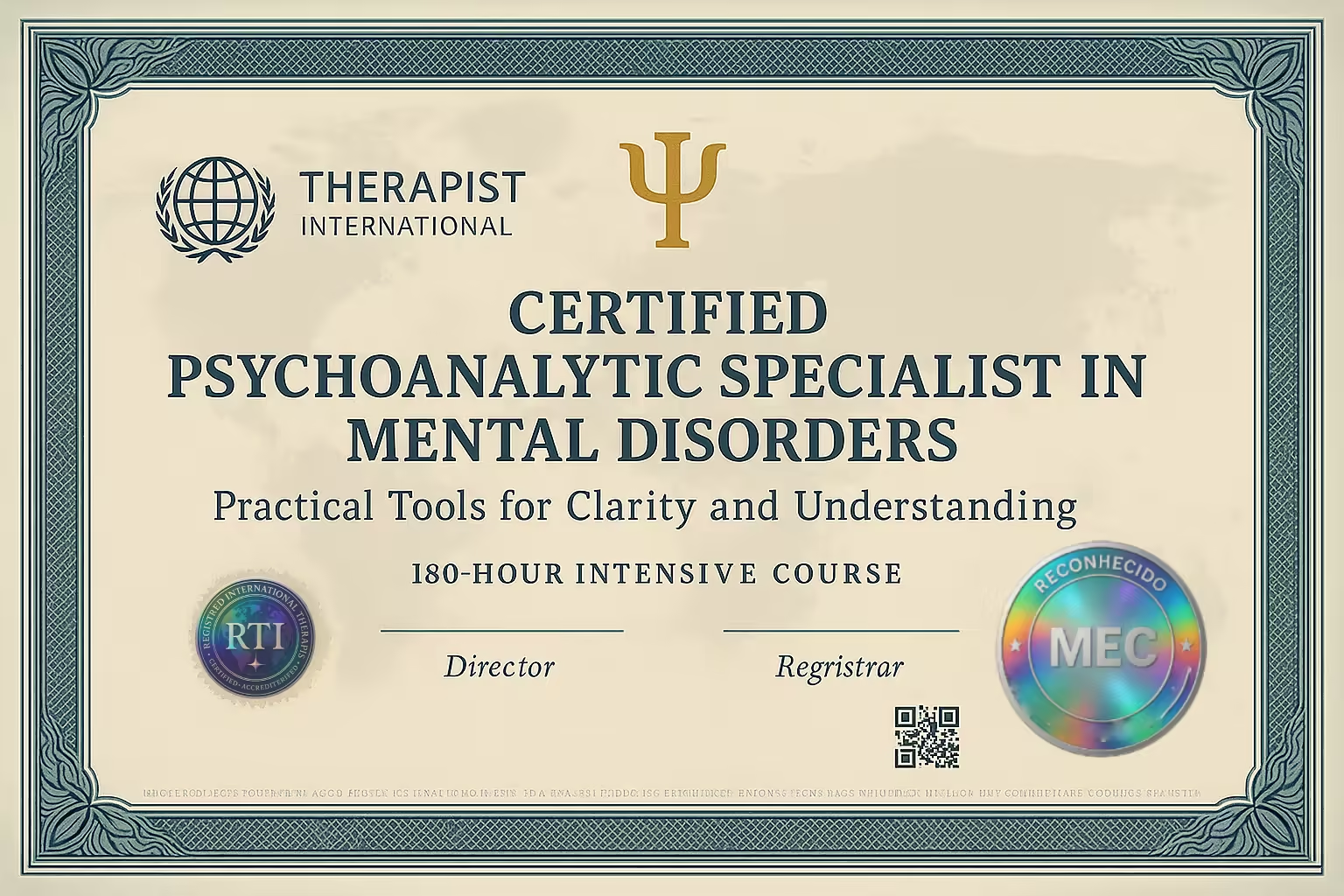
Globally valid certificate
An official certificate of completion you can show and verify.
Professional register entry
Your name in the Therapist University professional register.
Practitioner ID & badge
Your official, verifiable practitioner ID and digital badge.
This is a completion-based professional certification in the psychoanalytic understanding of mental disorders — not a state license, medical qualification, or authorization to diagnose, prescribe, or treat acute psychiatric conditions.
Questions
Does this certification let me diagnose mental disorders?
No. This is a completion-based professional certification, not a medical or clinical license. You learn to recognize and understand how major presentations appear and to work with the underlying patterns psychoanalytically. Formal diagnosis and any medical decisions remain the work of licensed physicians and psychiatrists, and a core part of this program is knowing exactly where that boundary sits.
Is this certification valid, and what is its actual scope?
It is a globally valid certificate of completion issued by Therapist University, a US-based institution, plus an entry in our professional register and a practitioner ID badge. It certifies that you completed structured training in recognizing presentations and working within scope. It is not a state license, is not CHEA/USDE-accredited, and does not authorize you to diagnose or prescribe. Psychoanalysis is largely unregulated in the US (outside New York); we state this plainly so you know precisely what you are earning.
I am taking this for personal reasons, not to practice. Is it still right for me?
Yes. Many students enroll to finally understand a diagnosis in the family, a partner's behavior, or their own recurring patterns. The program is written in plain language and includes a dedicated personal-application module. You get the same clear map of what may be happening inside a person — without any pressure to see clients.
Is the Mental Disorders specialization valid in my country?
It is a globally valid certificate of completion, used by graduates across 130+ countries. It certifies that you trained and qualified through Therapist University — it is not a government-issued license. See our Recognition & Validity page for the honest specifics.
What exactly do I receive?
The certificate of completion, an entry in our professional register, and your official practitioner ID badge — all publicly verifiable.
Become a certified Mental Disorders specialist
$297 · certificate, professional register entry, and practitioner ID included.