
Religion Specialization
Professional Certification in Psychoanalysis
The Religion specialization certifies you to work with faith, meaning, guilt, and spiritual conflict in the clinical setting — with the respect these material demand. You learn to hold a client's belief system without imposing or dismissing your own, and to recognize when religious struggle is doing the work of grief, shame, or fear. It is also personal: a structured place to reconcile your own belief, doubt, and the role faith plays in your inner life.
For your practice
Work with faith, meaning, guilt, and spiritual conflict in the clinical setting — respectfully and skillfully.
For your own life
Reconcile belief, doubt, and the role faith plays in your inner life.
What you'll learn
- 1Faith as Psychic Structure. How belief, ritual, and the image of the divine function in the inner world — as a source of meaning, containment, and identity. You learn to map a client's spiritual life without evaluating whether it is 'true.'
- 2Religious Guilt, Shame, and Scrupulosity. Distinguishing healthy moral conscience from punishing, intrusive religious guilt and scrupulous over-control. Techniques to work with shame rooted in sin, purity, and divine judgment without dismissing the faith itself.
- 3Crisis of Faith and Deconstruction. Supporting clients moving through doubt, loss of belief, or leaving a religious community — the grief, disorientation, and identity rupture this involves. Holding the process without steering toward either belief or unbelief.
- 4Spiritual Conflict in Relationships and Family. Interfaith tension, generational pressure, mixed-belief marriages, and estrangement over religion. How faith differences carry deeper attachment and loyalty conflicts, and how to work with the system around the client.
- 5High-Control Religion and Spiritual Harm. Recognizing the psychological residue of authoritarian or high-demand religious environments — fear, perfectionism, and difficulty trusting one's own judgment. Scope-honest framing and when spiritual harm intersects with trauma that warrants referral.
- 6Respectful, Non-Imposing Clinical Stance. The session protocol: assessing the role of faith, using the client's own theological language, managing your own beliefs and counter-transference, and the clear boundary between psychoanalytic work and pastoral or doctrinal guidance.
Who this is for
- Practitioners whose clients raise faith, prayer, religious guilt, or loss of belief in session and who want a respectful, non-imposing way to work with it
- People navigating their own crisis of faith, deconstruction, or the tension between belief and doubt who want a structured framework rather than platitudes
- Those who grew up in a high-control or strict religious environment and carry guilt, fear, or scrupulosity they want to understand
- Clergy, chaplains, and faith-community leaders who want psychological depth to complement (never replace) their pastoral role
What you'll be able to do
- Take a faith history and assess the role religion plays in a client's distress without imposing or pathologizing their beliefs
- Work with religious guilt, shame, and scrupulosity using a structured, respectful protocol
- Support a client through crisis of faith, deconstruction, or leaving a community while holding a neutral, non-steering stance
- Recognize the boundary between psychoanalytic work and pastoral/spiritual direction, and refer appropriately when spiritual harm overlaps with trauma
What's included
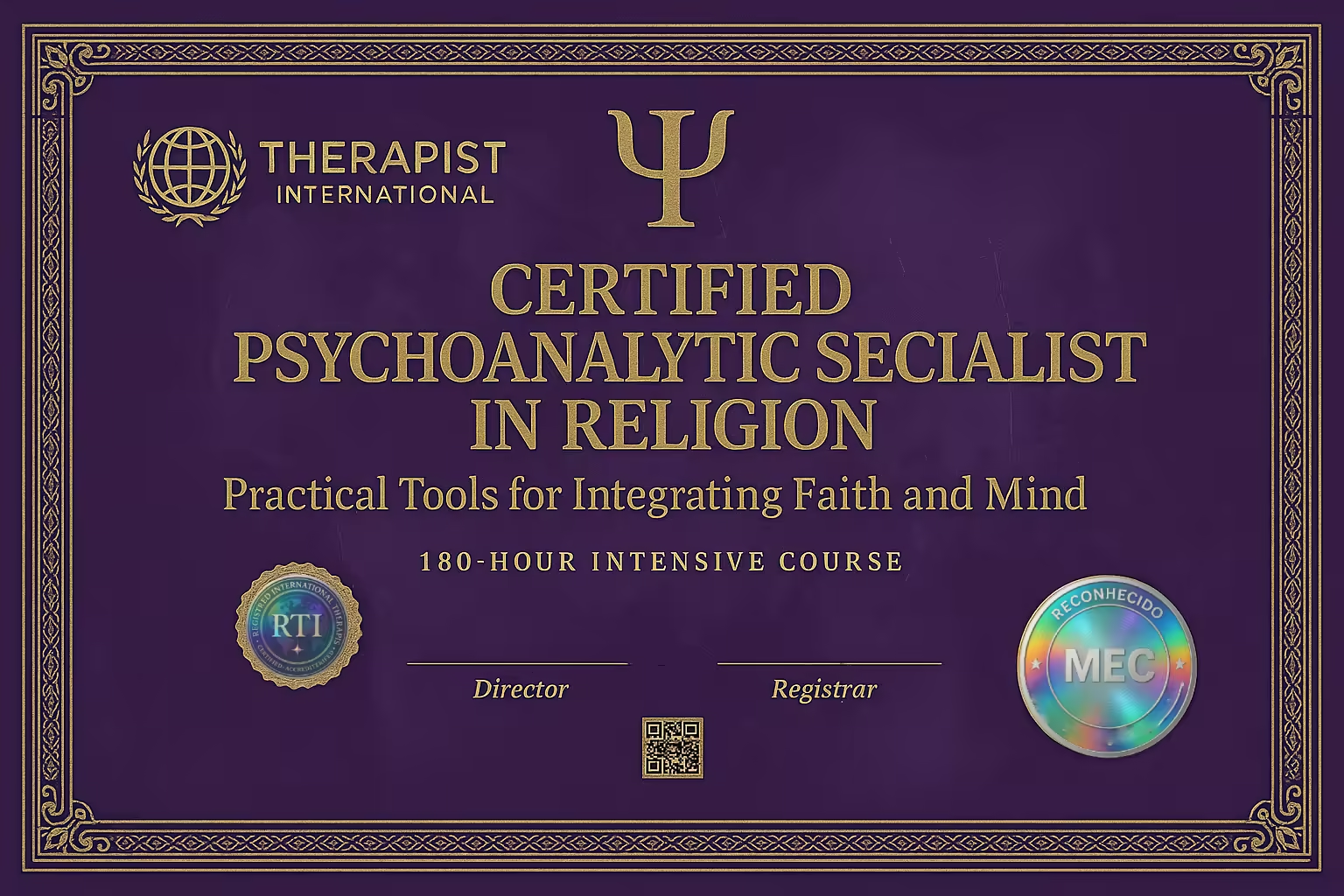
Globally valid certificate
An official certificate of completion you can show and verify.
Professional register entry
Your name in the Therapist University professional register.
Practitioner ID & badge
Your official, verifiable practitioner ID and digital badge.
This is a completion-based professional certification with a professional register entry and practitioner ID badge — not a state license, accredited degree, theological credential, or religious authority.
Questions
Is this a religious or theological credential?
No. This is a completion-based professional certification in the psychology of faith and spiritual conflict — not a theological degree, ordination, or any kind of religious authority. It does not certify you to give doctrinal, pastoral, or spiritual direction. It trains you to work respectfully with how belief, doubt, and guilt operate in a person's inner life, from a psychoanalytic standpoint.
Do I have to share my client's faith — or any faith at all — to do this work?
No. The entire stance taught here is non-imposing and belief-neutral. You work within the client's own framework using their language, whether you share their faith, hold a different one, or hold none. The certification explicitly trains you to manage your own beliefs and reactions so they do not enter the room.
What is the scope of this certification?
It is a completion-based professional certification from Therapist University, including a professional register entry and a practitioner ID badge. It is not a state license, an accredited academic degree, or transferable credit, and it does not authorize you to diagnose. It defines a scope of practice for working with the psychology of religion and spiritual conflict — understanding and supporting, not curing or providing religious counsel.
Is the Religion specialization valid in my country?
It is a globally valid certificate of completion, used by graduates across 130+ countries. It certifies that you trained and qualified through Therapist University — it is not a government-issued license. See our Recognition & Validity page for the honest specifics.
What exactly do I receive?
The certificate of completion, an entry in our professional register, and your official practitioner ID badge — all publicly verifiable.
Become a certified Religion specialist
$297 · certificate, professional register entry, and practitioner ID included.