
Sexuality Specialization
Professional Certification in Psychoanalysis
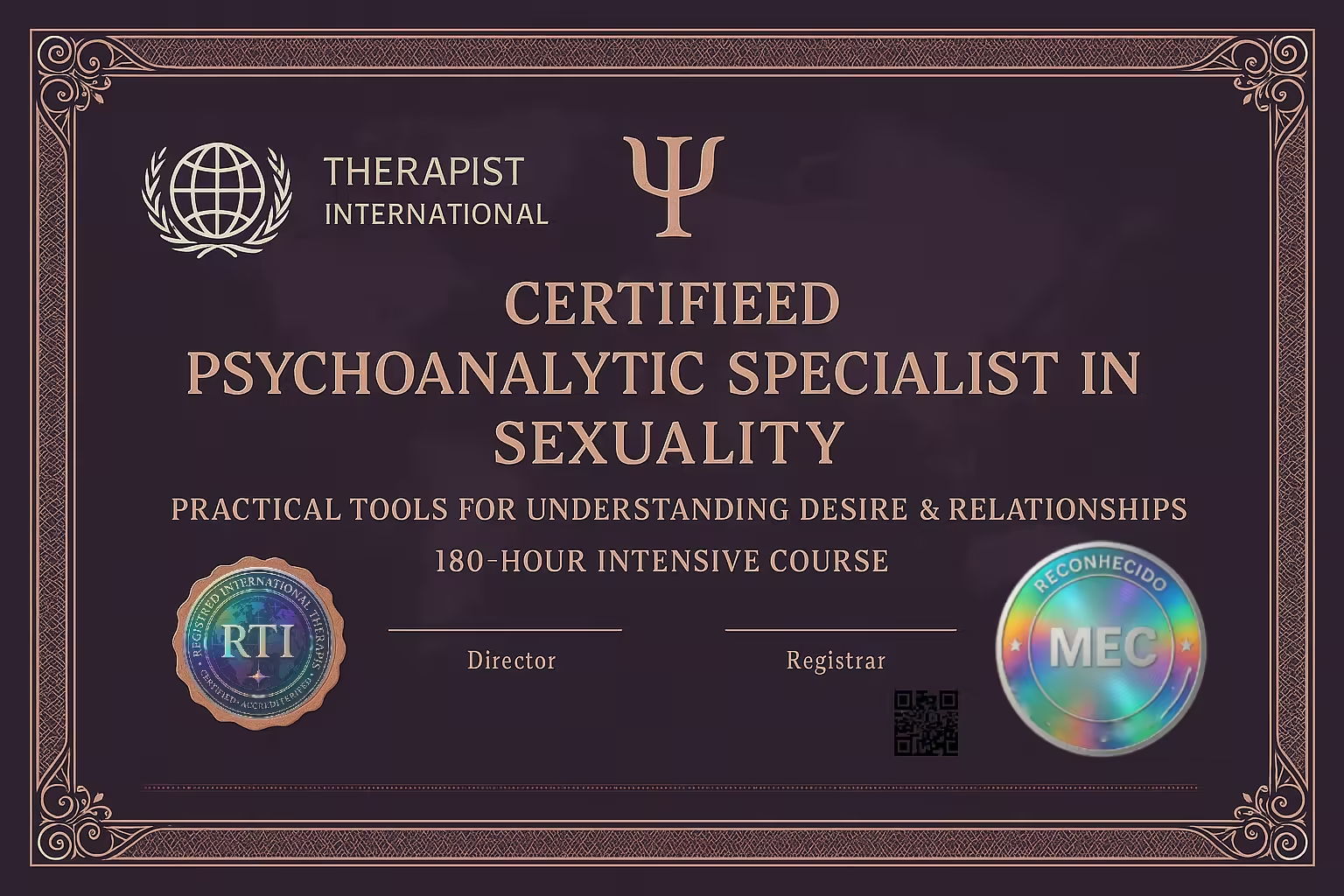
The Sexuality Specialization Certification at Therapist University trains you to work with desire, sexual identity, and intimacy concerns inside a non-judgmental, scope-honest clinical frame — and to make peace with your own. It is a completion-based professional certification with a register entry and practitioner ID badge, not a state license or sex-therapy medical credential. You finish able to hold the conversations most people never get to have: mismatched desire, shame, orientation, and the patterns that quietly shape every relationship you have.
For your practice
Address sexual identity, desire, and intimacy concerns within a non-judgmental, scope-honest clinical frame.
For your own life
Understand and accept your own sexuality and intimacy patterns.
What you'll learn
- 1Talking About Sex Without Flinching. Build the clinical vocabulary and composure to open conversations about desire, arousal, and sexual behavior — including how your own discomfort leaks into the room and how to keep it from shutting a client down.
- 2Desire, Arousal, and Mismatch. Work with the most common presentation: partners whose wants no longer line up. Map the difference between spontaneous and responsive desire, the role of resentment and routine, and how to open the topic without assigning blame.
- 3Sexual Identity and Orientation. Support clients exploring orientation, attraction, and self-definition from an affirming, non-pathologizing stance. Distinguish genuine questioning from internalized shame, and learn language that holds space rather than steering toward a conclusion.
- 4Shame, Secrecy, and the Erotic Story. Trace how early messages, religion, and culture script what a person believes they are allowed to want. Surface the private shame behind fantasies, compulsions, and avoidance, and work with it instead of reinforcing it.
- 5Intimacy, Attachment, and the Couple. See sexuality as relationship, not just behavior. Connect attachment patterns to closeness and distance, and learn structured ways to work with intimacy ruptures, performance fears, and the fear of being fully seen.
- 6Scope, Ethics, and Referral. The boundary module. Recognize when a presentation needs medical evaluation, trauma-specialist care, or a licensed sex therapist, and practice clean, respectful referral — the mark of a safe practitioner in this sensitive area.
Who this is for
- Practicing therapists and psychoanalysts who keep meeting clients with sexual and intimacy concerns and want a structured, ethical way to hold those sessions instead of redirecting them
- Counselors and coaches who feel their own discomfort take over the moment sex, desire, or orientation comes up in the room
- Anyone working through their own questions about desire, shame, identity, or intimacy who wants depth rather than quick reassurance
- Helping professionals who want a clear sense of where their scope ends and when to refer to a physician or licensed sex therapist
What you'll be able to do
- Open and hold sessions on sex, desire, and intimacy with composure, using a non-judgmental framing protocol rather than avoiding or rushing the topic
- Work with the patterns behind mismatched desire, shame, and orientation questions — including an affirming, non-pathologizing stance on identity
- Recognize the boundary of your scope and refer cleanly when a concern is medical, trauma-rooted, or requires a licensed sex therapist
- List your certification in the professional register and carry the practitioner ID badge as proof of completed, scoped training
What's included
Globally valid certificate
An official certificate of completion you can show and verify.
Professional register entry
Your name in the Therapist University professional register.
Practitioner ID & badge
Your official, verifiable practitioner ID and digital badge.
This is a completion-based professional certification in working with sexuality concerns, including a professional register entry and practitioner ID badge — not a state license, academic degree, or accredited sex-therapy medical credential.
Questions
Does this certification let me practice as a licensed sex therapist?
No. This is a completion-based professional certification from Therapist University — it is not a state license, an academic degree, or a clinical sex-therapy medical credential, and it does not carry CHEA or USDE accreditation. It certifies that you completed structured training in working with sexuality concerns within a defined scope of practice. Where local law requires a license to offer certain services, that requirement still applies and this certificate does not replace it.
Will I learn to diagnose or treat sexual dysfunctions?
No — and that distinction is built into the program. We never frame this work as diagnosing or curing. You learn to understand and support clients with desire, identity, and intimacy concerns, and just as importantly to recognize when a presentation points to a medical, hormonal, or trauma-related issue that belongs with a physician or a licensed specialist. Knowing where your scope ends is part of the certification.
I want this to understand my own sexuality, not to practice. Is that valid?
Yes, and it is one of the most common reasons people enroll. The same material that prepares you to work with clients is designed to help you understand your own desire, shame, and intimacy patterns. You can take the full program purely for personal insight; the certification, register entry, and badge are there if you later decide to practice.
Is the Sexuality specialization valid in my country?
It is a globally valid certificate of completion, used by graduates across 130+ countries. It certifies that you trained and qualified through Therapist University — it is not a government-issued license. See our Recognition & Validity page for the honest specifics.
What exactly do I receive?
The certificate of completion, an entry in our professional register, and your official practitioner ID badge — all publicly verifiable.
Become a certified Sexuality specialist
$297 · certificate, professional register entry, and practitioner ID included.